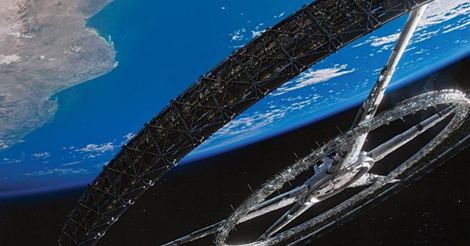
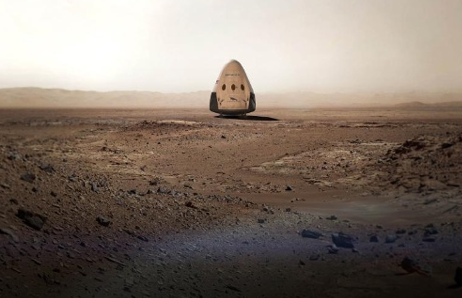
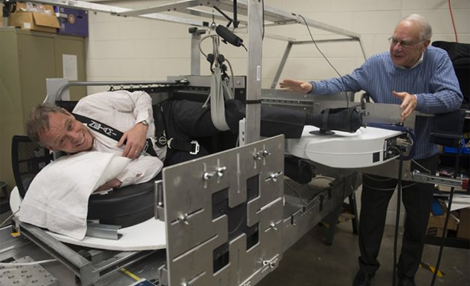
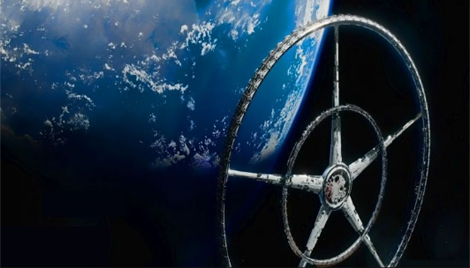
71 宇宙開発のゆくえ #宇宙旅行○宇宙関連ビジネス:衛星サービス、衛星製造等 [1]・市場規模(売上額):335billions$(2015 △4%)・市場の中心は米国(約4割)だが、米国以外の市場が増加。・官需は頭打ち・・・2006年にNASAはISSへの物資及び人 の輸送をSpaceX等民間に委託。○2011年9月 NASAは、引退したスペースシャトルの後継となる新型ロケットの開発計画を発表した。[2]・開発費用100億ドル(約7660億円)の巨大プロジェクトだ。・新型ロケットの完成予定は2017年で、2025年までに小惑星への有人探査を実施し、2030年代には火星へ人類を運ぶことを目標に掲げている。○2017年 米国の新政権による宇宙開発計画の変更。○民間による宇宙開発 [1]1.火星への移住・マーズワン:2027年までに、火星への片道移住をしようとしている、オランダの民間非営利団体[3] ※Mars One Webshop [4]・SpaceX [5]:21世紀前半に火星に8万人の移住を計画 [6] 2.資源採掘・Planetary Resources(2010 - ):小惑星やその付近での水の採取を当面の目標としている。[7]・Deep Space Industries:2020年代の初めに小惑星からの資源採掘を目標としている。[8]☆宇宙開発の課題は、有人・無人というより、宇宙工場、資源採掘などで、いくらかでも開発費用を回収できるシステムを構築することだろう。○その他 参考 [9]【参 照】1. 内閣府 宇宙開発戦略推進事務局“国内外の宇宙機器・利用産業の 市場構造及び動向について(1)“ 20160728http://www8.cao.go.jp/space/comittee/27-sangyou/sangyou-dai2/siryou1-1.pdf2.ナショナルジオグラフィック ニュースhttp://www.nationalgeographic.co.jp/news/news_article.php?file_id=20110915063. No.65-1-3-1 マーズワン(Mars One) 4. Mars One Webshophttps://community.mars-one.com/webshop/products/hooded-sweaters5. SpaceX(Space Exploration Technologies Corporation 2002 - ):打ち上げロケットファルコン9やファルコンヘビー、ならびにファルコン9で打ち上げるドラゴン宇宙船を開発した。[10]6. No.65-1-3-2 スペースX(SpaceX)社7.プラネタリー・リソーシズ - Wikipedia8. Deep Space Industries - Wikipedia9. “2017-01-26 宇宙ビジネスの新潮流”at 宇宙開発情報http://www.spaceref.co.jp/10. スペースX - Wikipedia
70 Weather Control #SpaceTravel
70-1 Space Parasol Project(Measures against global warming)
70-1-1 Traditional plan
○Initial proposal (1989) [1]
:Produce parasols on the moon, and float into space.・・・The parasols are too heavy.
○Proposal of the University of Arizona (2006) [1]
・The films(having a thickness of 0.005mm diametrically 60cm, and disposed diametrically 5,000km 100,000 km long cylindrical in Lagrange point) scatter sunlight 10%.
・The total weight of films is 20 million tons. The films are launched in electro magnetics-based launcher from the ground, and those are moved to the Lagrange point in the ion engine transport aircraft.
・・・The parasol is still heavy.
☆If you use panels as parasol, you can lead to cost down by linking to "No.69-4 Space Solar Power Systems:SSPS".
70-1-2 My Plan
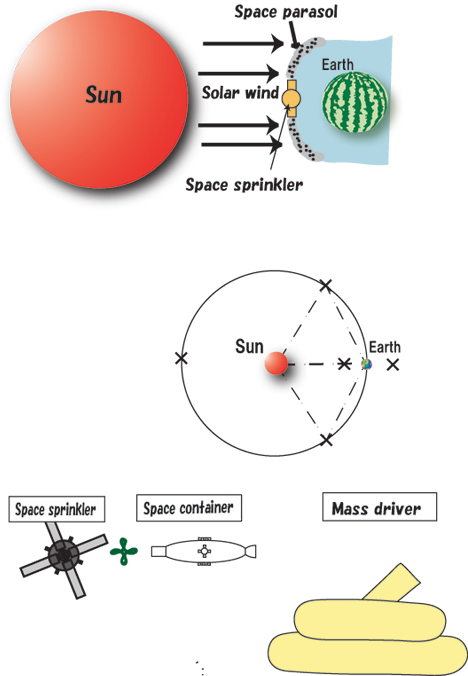
• In this plan they set up space-sprinkler at the Lagrangian point, and create parasol with sprayed dust and soot between the earth and sun.
・If you establish a space-sprinkler except Lagrangian poin, you should always have corrections to change the location.
・Lagrangian point is position where they can rotate around the sun without changing the positional relationship between the sun and the satellite, and there are five points between the sun and the earth.
・In the Space parasol plan, a space sprinkler and a space container are sent with a mass driver from a moon base to the Lagrangian point.
・A space sprinkler rotates at the Lagrangian point, sprinkling dust and soot, and "The Parasol" will be formed between the sun and the earths.
 70-2 Move the Earth = Spaceship Earth
○The human race needs to move to Mars orbit to within 1 billion years.
70-2-1 Set up a nuclear fusion rocket engine on the Earth (1982) [2]
・Proposal of Mieczyslaw Taube
・Arranging a huge pulse fusion rocket engine on the equator of the Earth, and moving the Earth to the Jupiter orbit.
・In this project Earth's mass is released 10% between 1 billion years.
・・・Mottainai!
70-2-2 NASA’s plan(2001) [3]
・It uses the the same techniques to deflect asteroids or comets heading towards Earth to control the orbit of the Earth.
・We just require delicacy of planning and manoeuvring for avoiding an adverse influence on the Earth and the moon.
【参 照】
1. 宇宙日傘《科学情報番組・ヴォイニッチの科学書》2006/11/25
http://obio.c-studio.net/science/137.htm
2. Taube, M., "Future of the Terrestrial Civilization Over a Period of Billions of Years", Journal of the British Interplanetary Society, Vol.35, p.219, May 1985
3. Robin McKie “Nasa aims to move Earth”(2001) at theguardian
https://www.theguardian.com/environment/2001/jun/10/globalwarming.climatechange
70-2 Move the Earth = Spaceship Earth
○The human race needs to move to Mars orbit to within 1 billion years.
70-2-1 Set up a nuclear fusion rocket engine on the Earth (1982) [2]
・Proposal of Mieczyslaw Taube
・Arranging a huge pulse fusion rocket engine on the equator of the Earth, and moving the Earth to the Jupiter orbit.
・In this project Earth's mass is released 10% between 1 billion years.
・・・Mottainai!
70-2-2 NASA’s plan(2001) [3]
・It uses the the same techniques to deflect asteroids or comets heading towards Earth to control the orbit of the Earth.
・We just require delicacy of planning and manoeuvring for avoiding an adverse influence on the Earth and the moon.
【参 照】
1. 宇宙日傘《科学情報番組・ヴォイニッチの科学書》2006/11/25
http://obio.c-studio.net/science/137.htm
2. Taube, M., "Future of the Terrestrial Civilization Over a Period of Billions of Years", Journal of the British Interplanetary Society, Vol.35, p.219, May 1985
3. Robin McKie “Nasa aims to move Earth”(2001) at theguardian
https://www.theguardian.com/environment/2001/jun/10/globalwarming.climatechange
70 気象コントロール #宇宙旅行
70-1 スペースパラソル(宇宙日傘)計画(地球温暖化対策)
70-1-1 従来の計画
○最初の提案(1989) [1]
:日傘を月で製造し、宇宙空間に浮かべる。・・・日傘が重すぎる。
○アリゾナ大学の提案(2006) [1]
・ラグランジュ点に直径60cm、厚さ0.005mmの膜を直径5,000km長さ10万kmの筒状に配置し、太陽光を10%散乱させる。
・日傘の総重量は2,000万トン。地上からエレクトロマグネティックスベースランチャーで打ち上げ、イオンエンジン輸送機でラグランジュ点に移動する。
・・・まだ重い。
☆パネルのようなものを日傘として使うのであれば、No.69-4 宇宙太陽光発電システムと結びつけることでコストダウンにつながる。
70-1-2 私の計画
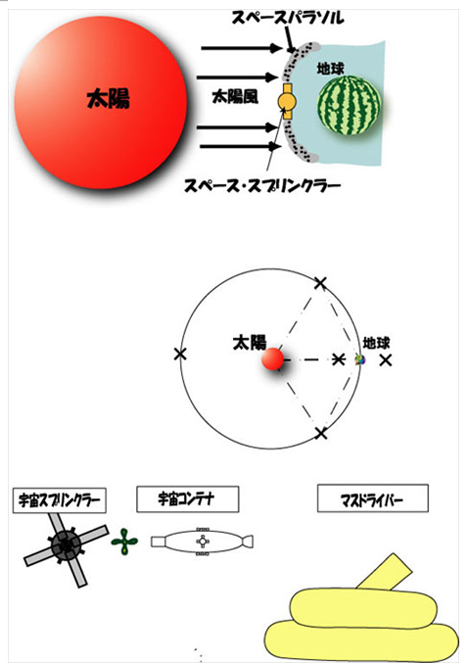
・私のスペースパラソル計画は、ラグランジュ点に宇宙スプリンクラーを設置し、塵や煤を散布して太陽と地球の間にパラソル(日傘)を作り出そうというものだ。
・宇宙スプリンクラーをラグランジュ点以外に設置すると、常に位置の修正をしなくてはならない。
・ラグランジュ点とは、衛星が太陽との位置関係を変えずに太陽の周りを回ることのできる位置(点)のことで、太陽と地球の間には、ラグランジュ点が5つある。
・スペースパラソル計画では、月面基地からマスドライバーによって宇宙スプリンクラーと宇宙コンテナをラグランジュ点に送り込む。
・宇宙スプリンクラーは、ラグランジュ点で回転しながら塵や煤を散布することによって、太陽と地球の間に“日傘“を形成する。
 70-2 地球を動かす計画=宇宙船地球号
○10億年以内に火星軌道まで移動する必要がある。
70-2-1 地球に核融合ロケットエンジンを設置(1982) [2]
・Mieczyslaw Taubeが提案。
・地球の赤道上に巨大なパルス核融合ロケットエンジンを並べ、地球を木星軌道まで動かす。
・この作業では10億年間で地球のおよそ1割に相当する質量が噴射される。
・・・もったいない!
70-2-2 NASAの計画(2001年) [3]
・小惑星や彗星の地球衝突を避ける技術を使って地球の軌道をコントロールする。
・地球や月への悪影響を避けるための繊細な技術が必要。
【参 照】
1. 宇宙日傘《科学情報番組・ヴォイニッチの科学書》2006/11/25
http://obio.c-studio.net/science/137.htm
2. 太陽が最期を迎えても地球ごと助かる方法 A Successful Failure
http://d.hatena.ne.jp/LM-7/20080330/1206878248
3. Robin McKie “Nasa aims to move Earth”(2001) at theguardian
https://www.theguardian.com/environment/2001/jun/10/globalwarming.climatechange
70-2 地球を動かす計画=宇宙船地球号
○10億年以内に火星軌道まで移動する必要がある。
70-2-1 地球に核融合ロケットエンジンを設置(1982) [2]
・Mieczyslaw Taubeが提案。
・地球の赤道上に巨大なパルス核融合ロケットエンジンを並べ、地球を木星軌道まで動かす。
・この作業では10億年間で地球のおよそ1割に相当する質量が噴射される。
・・・もったいない!
70-2-2 NASAの計画(2001年) [3]
・小惑星や彗星の地球衝突を避ける技術を使って地球の軌道をコントロールする。
・地球や月への悪影響を避けるための繊細な技術が必要。
【参 照】
1. 宇宙日傘《科学情報番組・ヴォイニッチの科学書》2006/11/25
http://obio.c-studio.net/science/137.htm
2. 太陽が最期を迎えても地球ごと助かる方法 A Successful Failure
http://d.hatena.ne.jp/LM-7/20080330/1206878248
3. Robin McKie “Nasa aims to move Earth”(2001) at theguardian
https://www.theguardian.com/environment/2001/jun/10/globalwarming.climatechange
69 Energy #SpaceTravel
69-1 Comparison
・4.0*10^-19 J The mass of a electron neutrino [1]
・1.5*10^-8 J The mass of a proton [2]
・2.0 * 10 ^ -8 J The mass of a Higgs particle [3]
・10^0(Ten to zero power)=1J(joule) The potential energy of the apple (102 g) of one meter height at the surface of the Earth. [4]
・1.67*10^6 J/day Energy consumption of the human brain
・1.9*10^11J Kinetic energy to escape objects of 1kg mass from the solar system [4]
・2.5*10^17J Nuclear energy of the largest explosion in human history (Tsar Bomba, 1961) [4]
69-2 Dyson sphere [4]
○First proposed by theoretical physicist Freeman Dyson in 1960.
○A Dyson sphere is a hypothetical megastructure that completely encompasses a star and captures most or all of its power output.
○One theory for an advanced alien race is that they might harness the power of an entire star.
○In addition, it is possible to know the direction of technology development.
○KIC 8462852, located 1,480 light-years away, has produced a series of bizarre light fluctuations researchers cannot explain, so this looks like a Dyson sphere.[5] [6] [7]
○The SETI Institute's initial radio reconnaissance of KIC 8462852, however, found no evidence of technology-related radio signals from the star. [8]
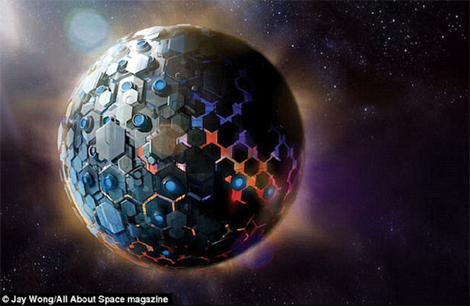 ※Image of a Dyson sphere [5]
69-3 Kardashev scale:Civilization's level based on the amount of energy [9]
○In 1964, Kardashev defined three levels of civilizations, based on the order of magnitude of power available to them:
Type I Technological level close to the level presently attained on earth
≒4.0*10^12 J/s
Type II A civilization capable of harnessing the energy radiated by its own star
≒4.0*10^26 J/s
Type III A civilization in possession of energy on the scale of its own galaxy
≒4.0*10^37 J/s
○Michael Garrett concluded that Kardashev Type-III civilisations are either very rare or do not exist in the local Universe.( Aug 2015)
○Reaching period
Type I 100~200years
Type II a few thousand years
Type III 100,000 to a million years
69-4 Space Solar Power Systems:SSPS
○The goal time of commercialization of JAXA is 2030.
○Element technology [10]
1) collecting solar energy in space with reflectors or inflatable mirrors onto solar cells
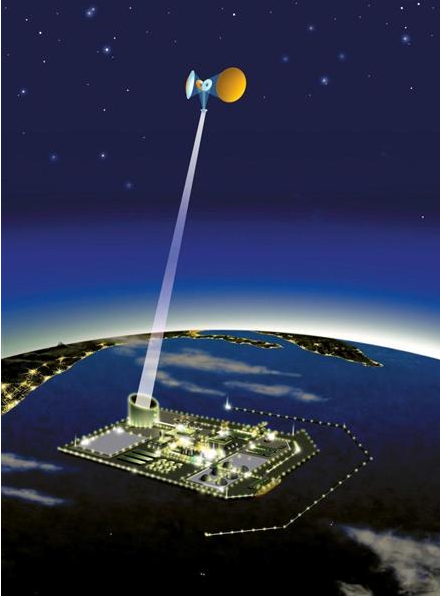
2) wireless power transmission to Earth via microwave or laser
※However, laser is affected by the weather.
3) receiving power on Earth via a rectenna, a microwave antenna
※Receiving station is installed on the sea or the like.
○Cost
・In the case of facilities of 1 million kw(1 nuclear power plant) [11]
Transportation costs:50 billin$
Construction costs :13~20 billin$
Running costa :3.4 billin$/yr
※The solar panels is 2km square.
※It is necessary to lower transportation costs to 1/50.
※Construction costs of 1 nuclear power plant is the billions of dollars, but, in the case of Japan, the final disposal site is not.
※Image of a Dyson sphere [5]
69-3 Kardashev scale:Civilization's level based on the amount of energy [9]
○In 1964, Kardashev defined three levels of civilizations, based on the order of magnitude of power available to them:
Type I Technological level close to the level presently attained on earth
≒4.0*10^12 J/s
Type II A civilization capable of harnessing the energy radiated by its own star
≒4.0*10^26 J/s
Type III A civilization in possession of energy on the scale of its own galaxy
≒4.0*10^37 J/s
○Michael Garrett concluded that Kardashev Type-III civilisations are either very rare or do not exist in the local Universe.( Aug 2015)
○Reaching period
Type I 100~200years
Type II a few thousand years
Type III 100,000 to a million years
69-4 Space Solar Power Systems:SSPS
○The goal time of commercialization of JAXA is 2030.
○Element technology [10]
1) collecting solar energy in space with reflectors or inflatable mirrors onto solar cells
2) wireless power transmission to Earth via microwave or laser
※However, laser is affected by the weather.
3) receiving power on Earth via a rectenna, a microwave antenna
※Receiving station is installed on the sea or the like.
○Cost
・In the case of facilities of 1 million kw(1 nuclear power plant) [11]
Transportation costs:50 billin$
Construction costs :13~20 billin$
Running costa :3.4 billin$/yr
※The solar panels is 2km square.
※It is necessary to lower transportation costs to 1/50.
※Construction costs of 1 nuclear power plant is the billions of dollars, but, in the case of Japan, the final disposal site is not.
 ○Relation
・Solar Sail ⇔No.64-5 Breakthough Starshot
【Refernces】
1. Neutrino - Wikipedia
2. Higgs boson - Wikipedia
3. Proton - Wikipedia
4. Dyson sphere - Wikipedia
5. MARK PRIGG FOR DAILYMAIL.COM(October 2015)
http://www.dailymail.co.uk/sciencetech/article-3271546/Have-researchers-alien-MEGASTRUCTURE-Researchers-reveal-bizarre-star-say-huge-unknown-object-blocking-light.html
6. No.96 Communication with the Alien
7. Maddie Stone” The So-Called Alien Megastructure Just Got Even More Mysterious”at GIZMODO 20160805
http://gizmodo.com/the-so-called-alien-megastructure-just-got-even-more-my-1784883811
8. KIC 8462852 - Wikipedia
9. Kardashev scale - Wikipedia
10. Space based solar power - Wikipedia
11. 産経ニュース”「馬鹿げた計画」酷評「宇宙太陽光発電」 NASAが手を引いても開発続ける「技術立国日本」の意地” 2015
http://www.sankei.com/premium/news/150327/prm1503270001-n3.html
○Relation
・Solar Sail ⇔No.64-5 Breakthough Starshot
【Refernces】
1. Neutrino - Wikipedia
2. Higgs boson - Wikipedia
3. Proton - Wikipedia
4. Dyson sphere - Wikipedia
5. MARK PRIGG FOR DAILYMAIL.COM(October 2015)
http://www.dailymail.co.uk/sciencetech/article-3271546/Have-researchers-alien-MEGASTRUCTURE-Researchers-reveal-bizarre-star-say-huge-unknown-object-blocking-light.html
6. No.96 Communication with the Alien
7. Maddie Stone” The So-Called Alien Megastructure Just Got Even More Mysterious”at GIZMODO 20160805
http://gizmodo.com/the-so-called-alien-megastructure-just-got-even-more-my-1784883811
8. KIC 8462852 - Wikipedia
9. Kardashev scale - Wikipedia
10. Space based solar power - Wikipedia
11. 産経ニュース”「馬鹿げた計画」酷評「宇宙太陽光発電」 NASAが手を引いても開発続ける「技術立国日本」の意地” 2015
http://www.sankei.com/premium/news/150327/prm1503270001-n3.html
69 エネルギー #宇宙旅行
69-1 比較
・電子ニュートリノの質量:4.0*10^-19 J [1]
・陽子の質量:1.5*10^-8 J [2]
・ヒッグス粒子の質量:2.0*10^-8 J [3]
・地球表面で地表から1メートルの高さにあるリンゴ (102 g) が持つ位置エネルギー:1 J [4]
・脳の消費エネルギー:1.67*10^6 J/日
・質量1kgの物体が太陽系から脱出するために必要な運動エネルギー:1.9*10^11 J [4]
・人類史上最大の核兵器が爆発したときに発したエネルギー(ツァーリ・ボンバ、1961年):2.5*10^17 J [4]
69-2 ダイソン球:星のエネルギー利用 [4]
○アメリカの宇宙物理学者、フリーマン・ダイソンが1960年提唱した。
○恒星を卵の殻のように覆い、そのエネルギーのほとんどを利用する仮説上の人工構造物。
○ダイソン球を発見すれば、高度な文明を持つ宇宙人が存在することを確認できる。
○また、技術開発の方向を知ることが出来る。
○地球から1,480 光年離れた恒星KIC 8462852は、不自然な赤外線を発していることから、ダイソン球である可能性がある。[5][6] [7]
○なお、SETIの科学者がアレン・テレスコープ・アレイで1-10GHzの電波を調べたものの、人工的な信号を見出すことはできなかった。[8]
※ダイソン球のイメージ[5]
69-3 エネルギーの利用レベル:カルダシェフ・スケール[8][9]
○ニコライ・カルダシェフは、高度に発達した宇宙文明を3つの段階に分けている。
第1段階 一つの惑星上で得られる全エネルギーを利用する文明≒4.0*10^12 J/s
第2段階 一つの恒星系で得られる全エネルギーを利用する文明≒4.0*10^26 J/s
第3段階 一つの銀河系で得られる全エネルギーを利用する文明≒4.0*10^37 J/s
○マイケル・ギャレットは、中赤外による地球外文明探索の結果、第3段階の文明は非常にまれか、存在しないと報告している。(2015年8月) [9]
○到達期間 [8]
第1段階 100~200年
第2段階 数千年
第3段階 10万~100万年
69-4 宇宙太陽光発電システム(SSPS:Space Solar Power Systems)[11]
○JAXAは2030年の商用化を目標にしている。
○要素技術
・宇宙空間に太陽光パネルを展開し、マイクロ波もしくはレーザーにより地上に送る。
※ただし、レーザーの場合は天候の影響を受ける。
※受信局は海上等に設置。
○コスト
・100万kw(原発1基分)の施設(2030年設置)の場合[11]
輸送費:5兆円
建設費:1.3~2兆円
維持管理費:340億円/年
※太陽光パネルは2km四方。
※発電コスト8円/kwhを達成するためには輸送費を今の50分の1にまで下げる必要がある。
※原発1基の建設費は数千億円だが、日本の場合、最終処分場はない。
○関連
・ソーラーセイル⇔No.64-5 恒星探査計画
【参 考】
1. ニュートリノ - Wikipedia
2.ヒッグス粒子 - Wikipedia
3.陽子 - Wikipedia
4.ダイソン球 - Wikipedia
5.MARK PRIGG FOR DAILYMAIL.COM(October 2015)
http://www.dailymail.co.uk/sciencetech/article-3271546/Have-researchers-alien-MEGASTRUCTURE-Researchers-reveal-bizarre-star-say-huge-unknown-object-blocking-light.html
6.No.97 宇宙人との交信
7.KIC8462852 - Wikipedia
8.“あのダイソン球と騒がれた星の謎がまた復活”at GIZMODO
http://www.gizmodo.jp/2016/08/kic-8462852-got-more-mysterious.html
9.Kardashev scale - Wikipedia
10. 宇宙太陽光発電 - Wikipedia
11.産経ニュース”「馬鹿げた計画」酷評「宇宙太陽光発電」 NASAが手を引いても開発続ける「技術立国日本」の意地”2015年3月
http://www.sankei.com/premium/news/150327/prm1503270001-n3.html
68 The Cost of Space Travel #SpaceTravel○Cargo [1]・・・< >:Success rate(%)・Falcon(SpaceX/USA) 1.6 billion$/t<79.2>・Proton(ILS/RUS) 1.7 billion$/t<88.2>・H2B(Mitsubishi Heavy Industries/JPN) 1.8 billion$/t<100> [2]・H2A(Mitsubishi Heavy Industries/JPN) 2.1 billion$/t<96.7> [3]・Ariane( Arianespace/EU) 2.1 billion$/t<95.2>○Passenger・Round trip of astronauts to the ISS by Soyuz 70.7million$(2013) [4] ・The cost of current space travel(4 minutes) 18 million$ [5]【References】1. Yomiuri Shimbun November 25, 20152. H-IIB - Wikipedia3. H-IIAロケット - Wikipedia 4. 日経ビジネス online-Shinya Mtsuurahttp://business.nikkeibp.co.jp/article/tech/20140522/265187/?P=25. Stuart Clark” Virgin Galactic tests new spaceplane”at theguardian.com 20161208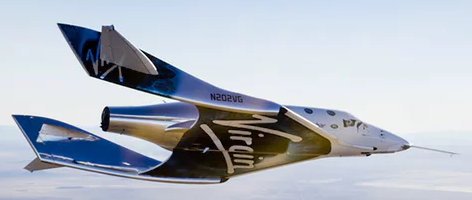 https://www.theguardian.com/science/2016/dec/08/virgin-galactic-tests-new-spaceplane-spacewatch
68 宇宙旅行のコスト #宇宙旅行○貨物 [1]・・・< >:成功率(%)・ファルコン(スペースX/米国) 16億円/t<79.2>・プロトン(ILS/ロシア) 17億円/t<88.2>・H2B(三菱重工業/日本) 18億円/t<100> [2]・H2A(三菱重工業/日本) 21億円/t<96.7> [3]・アリアン(アリアンスペース/欧州) 21億円/t<95.2>○旅客・ソユーズによるISSへの往復 85億円(2013) [4] ・4分間の宇宙旅行(訓練含む) 25万米ドル [5]【参 照】1. 読売新聞 2015年11月25日 2. H-IIBロケット - Wikipedia 3. H-IIAロケット - Wikipedia 4. 松浦 晋也”ウクライナで“困った”。米ロの宇宙での共依存“at 日経ビジネス onlinehttp://business.nikkeibp.co.jp/article/tech/20140522/265187/?P=25. 宇宙旅行の御案内 クラブツーリズム(ヴァージンギャラクティック社 日本地区公式代理店)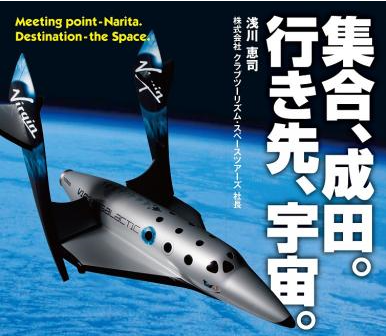 http://www.club-t.com/space/main.htm